

, Earth Date: October 2, 2025 CE

The EAT -- Lancet Commission on healthy, sustainable, and just food systems
The Planetary Health Diet (PHD)
The Planetary Health Diet is a global reference diet based on the best available science. It represents a dietary pattern that supports optimal health outcomes and can be applied globally for different populations and different contexts, while also supporting cultural and regional variation.
The PHD is rich in plants: whole grains, fruits, vegetables, nuts, and legumes comprise a large proportion of foods consumed, with only moderate or small amounts of fish, dairy, and meat recommended.
The PHD is based entirely on the direct effects of different diets on human health, not on environmental criteria. The diet’s name arose from the evidence suggesting that its adoption would reduce the environmental impacts and nutritional deficiencies of most current diets.
Planetary Health, Sustainability and Food
Food systems sit at the nexus of health, environment, climate, and justice. A food systems transformation is fundamental for solving crises related to the climate, biodiversity, health, and justice. The central position of food systems emphasizes the interdependent nature of these crises, which highlights the need to create sustainable food systems across ecological, economic, political domains.
Unprecedented levels of action are required to shift diets, improve production, and enhance justice. A just transformation requires building coalitions both inside and outside food systems. Such efforts must closely align with other sustainability and health initiatives (eg, the Paris Agreement and the Kunming– Montreal Global Biodiversity Framework.
Planetary health diet
The planetary health diet (PHD) represents a dietary pattern that supports optimal health outcomes and can be applied globally for different populations and different contexts, while also supporting cultural and regional variation. The PHD is rich in plants: whole grains, fruits, vegetables, nuts, and legumes comprise a large proportion of foods consumed, with only moderate or small amounts of fish, dairy, and meat recommended.
The PHD is based entirely on the direct effects of different diets on human health, not on environmental criteria. The diet’s name arose from the evidence suggesting that its adoption would reduce the environmental impacts and nutritional deficiencies of most current diets.
Food system boundaries
Food system boundaries are science-based targets representing the food system share of the safe operating space within planetary boundaries.
These boundaries are based on the available evidence representing the degree of contribution needed from the food system to return or remain within planetary boundaries, including the present-day contribution of food systems to planetary boundary transgressions in relation to other sectors, estimates of minimum environmental impacts from food systems that are hard to abate (ie, through optimisation modelling across sectors), and estimates of reduced Earth system impact while also retaining productive agricultural systems.
Sustainable and ecological intensification
Sustainable intensification entails achieving important reductions in the environmental impacts of food systems though increased efficiency, reduced losses, and reduced pollution.
Ecological intensification is a subset of sustainable intensification that enhances the environmental performance of food systems by promoting ecological processes within agricultural fields, farms, and landscapes, such as above-ground and below-ground carbon sequestration, nutrient cycling and storage, pollination, and biological pest regulation.
Social foundations
Social foundations are the conditions that enable basic human rights—such as the rights to food, a healthy environment, and decent work—to be met for everyone.
This study build on previous work defining the minimum resources required to avoid resource deprivations and harms, and focus on the minimum conditions that enable people’s human rights to be met, such as healthy and affordable diets, healthy food environments, a safe climate, a non-toxic environment, living wages, and meaningful representation.
Great food transformation
An unprecedented global commitment to an interlinked range of actions to be taken by all sectors to make healthy food accessible to all, and produced, processed, distributed, and consumed fairly within planetary boundaries
Present-day status of planetary boundaries for land, biodiversity, water, nitrogen, and pesticide use
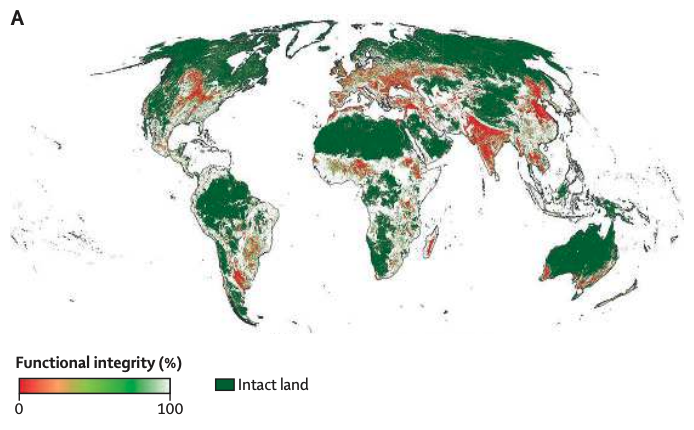
(A) Intact land (dark green) based on data from Rockström et al39 and ecosystem functional integrity of existing agricultural land based on data from Mohamed et al.223
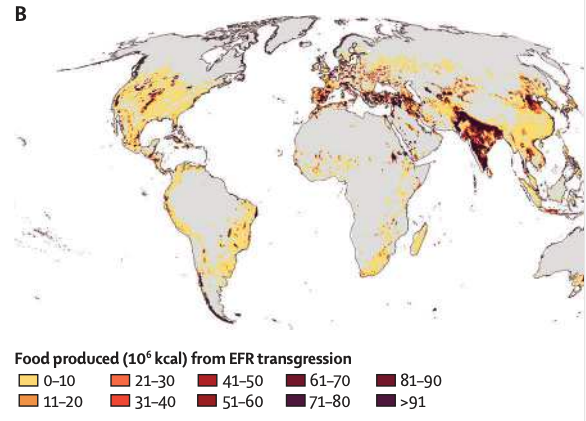
(B) Blue water, with regions where irrigation use exceeds freshwater EFRs, expressed as kilocalories of food produced per year from water that violates EFRs. Restricting irrigation without compensatory measures can affect yields in half of irrigated croplands (data from Jägermeyr et al226 and Gerten et al227).
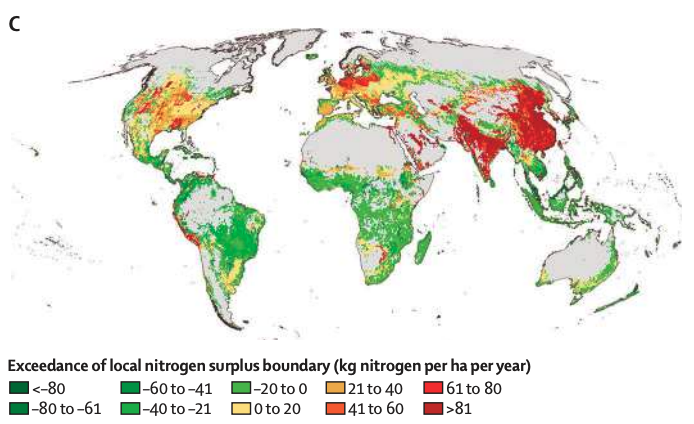
(C) Regions where the local nitrogen boundary is exceeded (values >0), and regions where nitrogen surplus boundaries are not yet exceeded and allow for an increase in nitrogen to meet crop demand (kg nitrogen per hectare per year; data from Schulte-Uebbing et al51).
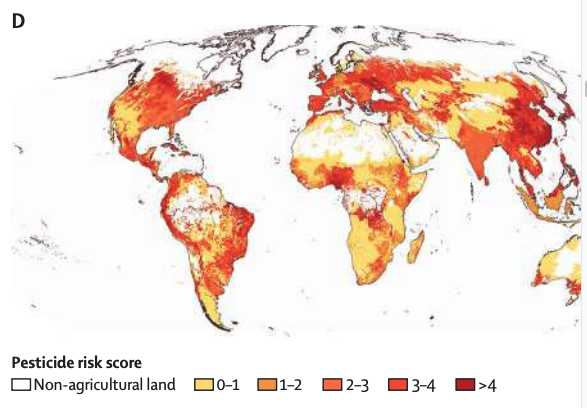
(D) Pesticide risk scores, indicating the exposure of agricultural land to pesticide pollution, are classified following average species sensitivity curves: low risk (0–1), medium risk (2–3), or high risk (>3). Data from Tang et al.52 Grey areas indicate no data. EFRs=ecosystem flow requirements.
Recipes
- Greece and the Plant Forward Kitchen
- What Is the Eat-Lancet Diet? Plus, Vegan Recipe Inspiration
- The Planetary Health Diet Cookbook
- Top autumn recipes