

By Pankaj Mishra, The Guardian, Earth Date: July 27, 2022 CE
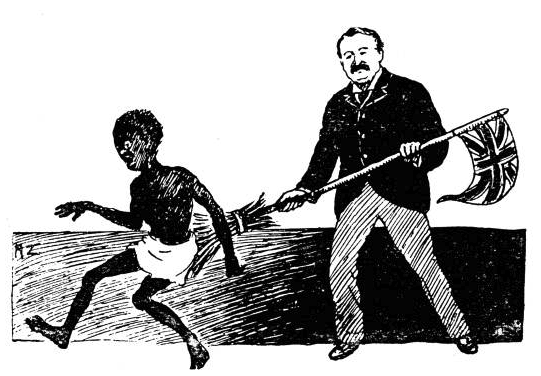
How Colonial Violence Came Home: The Ugly Truth of the First World War
Excerpts
Today, as racism and xenophobia return to the center of western politics, it is time to remember that the background to the first world war was decades of racist imperialism whose consequences still endure. It is something that is not remembered much, if at all, on Remembrance Day…
At the time of the first world war, all western powers upheld a racial hierarchy built around a shared project of territorial expansion. In 1917, the US president, Woodrow Wilson, baldly stated his intention, “to keep the white race strong against the yellow” and to preserve “white civilization and its domination of the planet”…
The US conquest of the Philippines between 1898 and 1902, to which Kipling dedicated The White Man’s Burden, took the lives of more than 200,000 civilians. The death toll perhaps seems less startling when one considers that 26 of the 30 US generals in the Philippines had fought in wars of annihilation against Native Americans at home. One of them, Brigadier General Jacob H Smith, explicitly stated in his order to the troops that “I want no prisoners. I wish you to kill and burn. The more you kill and burn the better it will please me”. In a Senate hearing on the atrocities in the Philippines, General Arthur MacArthur (father of Douglas) referred to the “magnificent Aryan peoples” he belonged to and the “unity of the race” he felt compelled to uphold.
As white supremacists feverishly build transnational alliances, it becomes imperative to ask, as Du Bois did in 1910: “What is whiteness that one should so desire it?” As we remember the first global war, it must be remembered against the background of a project of western global domination – one that was shared by all of the war’s major antagonists…
The first world war, in fact, marked the moment when the violent legacies of imperialism in Asia and Africa returned home, exploding into self-destructive carnage in Europe. It seems ominously significant that the potential for large-scale mayhem in the west is greater today than at any other time since 1945…
Read full article The Guardian