
Study Guide: Air Quality and Smoke Days
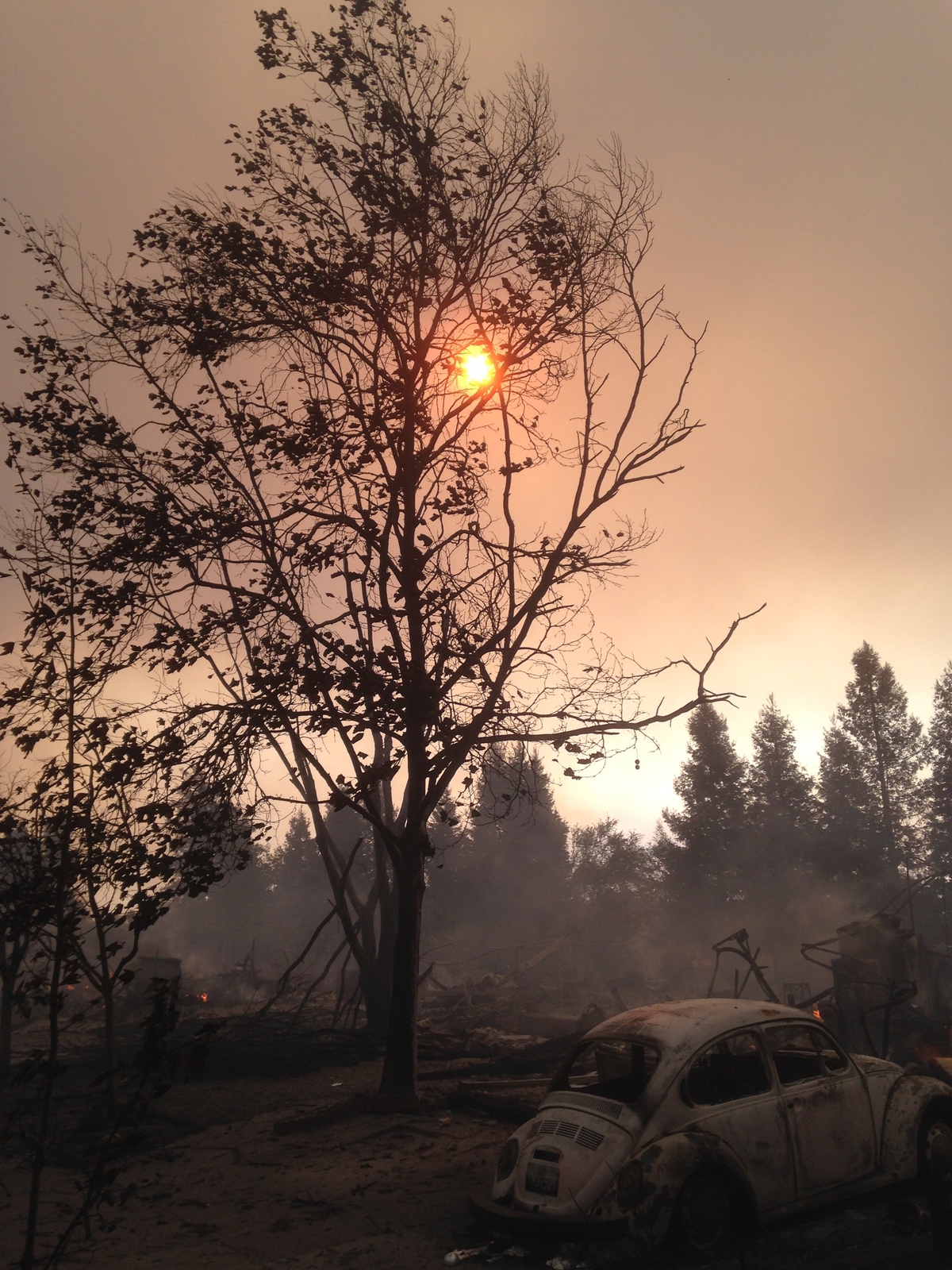
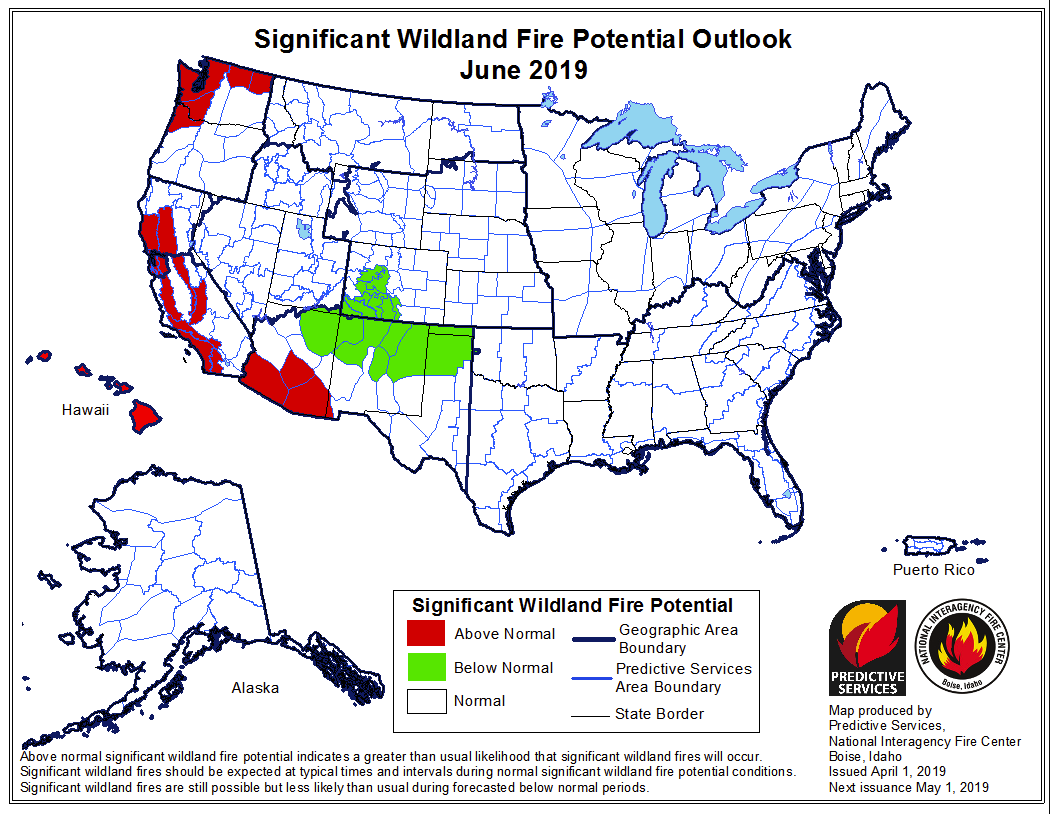
Major fires will become [have] become more frequent in California. Misleading information was widely propagated during the 2017 fires by some school administrators in the interest of maintaining high ADA (Average Daily Attendance). The lies propagated at that time led many parents to believe that driving children to school through smokey conditions to sit all day in poorly-filtered classrooms was the healthiest option.
The US EPA, a slightly more credible source of information, states:
“Fine particles, called “particle pollution,” are the pollutant of most concern in wildfire smoke. These microscopic particles can get deep into your lungs. They can cause many health problems from burning eyes and runny nose to aggravation of chronic heart and lung disease, leading to emergency department visits, hospital admissions and even premature death. Anyone with heart and lung disease is especially at risk. While not everyone reacts the same way to wildfire smoke, it’s always a good idea to reduce your exposure to smoke."
Source: www3.epa.gov/airnow/airaware/wildfires.html
Frequently Asked Questions: Smoke
No. As smoke floats away from the fire, the largest and heaviest particles drift to the ground in the form of ash. These are usually not as dangerous because they are easier for the mucus membrane to filter out and the lungs to cough out.
The longer smoke stays in the air, the higher the percentage of very fine particles. For this reason, smoke from faraway fires can potentially cause more long term health damage than smoke from nearby fires if it is breathed in for extended periods.
Frequently Asked Questions: Smoke in Schools
Probably not. If your child attends a typically underfunded public school in the US, classrooms are likely to have poor-quality systems, with low MERV level filters. The clerical staff in some schools may claim that classrooms have better air than your home. This is rarely true for the following reasons:
- Poor air filtration: Most schools use inexpensive or unmaintained air filters, such as MERV11 which are useless against the particulate matter in smoke. The “best” such systems can do is blow the smoke through the classroom.
- Poor construction: Many classrooms are housed in cheap portables with ancient, inefficient air filtration systems and poorly maintained walls and windows. There are many ways for outside air to enter such structures even when doors and windows are closed.
- Too much activity: It is impossible to keep a classroom full of energetic students quiet enough all day long to prevent exposure to outside air or to prevent disturbing the dust and ash that may have settled inside the room. As students and teachers enter and exit the classroom multiple times per day, they inevitably circulate large amounts of outside air into classrooms and kick up the dust already in the room.
- Getting there: Many live a long way from school. During long commutes we may pass through areas of extremely high pollution. Few vehicles are equipped to filter out fine particulate matter, such as PM2.5. The fact that you may not be able to see or smell the smoke inside you vehicle does not indicate that the air is safe. This twice-daily dose of heavy pollution can lead to long term health issues.
Frequently Asked Questions: Smoke in Homes
Many air filtration systems use filters measured with a MERV efficiency rating from 1 to 20. To protect your home from PM2.5, you should install filters with a rating of MERV 17 or higher. These are expensive and difficult to find.
| MERV Rating | Efficiency | PM 2.5 Protection |
|---|---|---|
| MERV 1-4 | Low: Usually made of a 1" think mat of fiberglass fibers. | ✗ |
| MERV 5-8 | Medium-Low: Can significantly improve air quality in a home, but are almost completely useless against the particulate matter in smoke. | ✗ |
| MERV 9-12 | Medium-High: Can significantly improve indoor air quality, but are useless against most particulate matter in smoke. | ✗ |
| MERV 13-16 | High: Can reduce indoor particles by as much as 95 percent, but are useless against the most dangerous particulate matter in smoke, such as PM 2.5. | ✗ |
| MERV 17-20 | High Particulate Air (HEPA): Have a High Efficiency Particulate Air (HEPA) rating. These are the most efficient filters, and the only ones that can filter out PM 2.5 particles. | ✓ |
There are many effective ways to protect your home from outside smoke, including:
- Upgrade and prepare your central air system filters: Ask a heating, ventilation and air conditioning (HVAC) professional what kind of high efficiency filters (rated MERV 17 or higher) you can use in your home’s HVAC system. Keep a few extra high quality air filters ready for use.
- Minimize outside trips: In advance of a smoke event, create an emergency kit with enough food, water and other supplies to provide for your whole family for at least three weeks. This will help minimize the need to go outside to shop.
- Create a “clean room”: In advance of a smoke event, choose a room in your home where you and your family can shelter in place. This room should not have a fireplace, and should have few windows and doors. A large bedroom is often a good choice. Stock the room with books, games, art supplies, musical instruments, movies, munchies, water, blankets, duct tape, toilet paper, battery operated lighting, emergency kits, emergency radio, etc.
- Get high-efficiency portable air filters": In advance of a smoke event, get a portable air cleaner that is the right size for the room where you plan to spend most of your time. Make sure it does not make ozone.
- Cover air leaks: In advance of a smoke event, make cardboard or plastic covers to tape over any problem openings in your home. If your home uses natural gas, be sure such appliances are either correctly turned off or remain adequately vented. Learn how to close the fresh-air intake if your HVAC system or room air conditioner if it has one.
- Contain children and pets: Keep children and pets inside as much as possible. Plan on spending long periods of time together in your safe room.
Frequently Asked Questions: Face Masks
Yes. Authoritative-sounding pronouncements often claim that face masks are useless for children. This is NOT true. A well-fitting face mask used correctly is far better than no protection at all. N95 face masks in children’s sizes are harder to find in an emergency, but ridiculously easy to find if you plan ahead. For example, by clicking here:
Note: Many face masks sold for children are KN95. This type of mask is regulated in China, not in the US. Beginning in the Reagan years, most product inspections at US ports of entry were greatly reduced or eliminated. This creates ideal conditions for the importation of knockoff KN95 masks to be dumped into the US market.
Yes. There are several better options. See the following table.
| Type | Filter | Description |
|---|---|---|
| N99 Face Mask | up to 99.9% | one-time use; no protection from oil-based toxins |
| P100 Half Face Respirator | up to 99.9% | extended-use; provides protection from oil-based toxins; ; no protection for the eyes |
| P100 Full Face Respirator | up to 99.9% | extended-use; full protection from oil-based toxins; includes a face shield to protect the eyes |
More Information
The above information is based in the following sources.
US NOAA Weather Forecasts
Air Quality Forecast Guidance for Sonoma, CA
US EPA Wildfire Smoke Fact Sheet
- http://localhost:1313/docs/general/indoor-air-filtration-factsheet-508.pdf
NIOSH-Approved Particulate Filtering Facepiece Respirators
PurpleAir
PurpleAir is a proven, shared-source air quality monitoring solution for private citizens and air quality professionals alike. It uses a new generation of laser particle counters to provide real time measurement of PM1.0, PM2.5 and PM10.
The PurpleAir network of sensors update every 120 seconds, providing real time readings to the PurpleAir Map. In most areas, this system is more reliable and accurate than the government’s own AQI system which has fewer sensors and is not updated as often.
NOAA-EPA Air Quality Index (AQI)
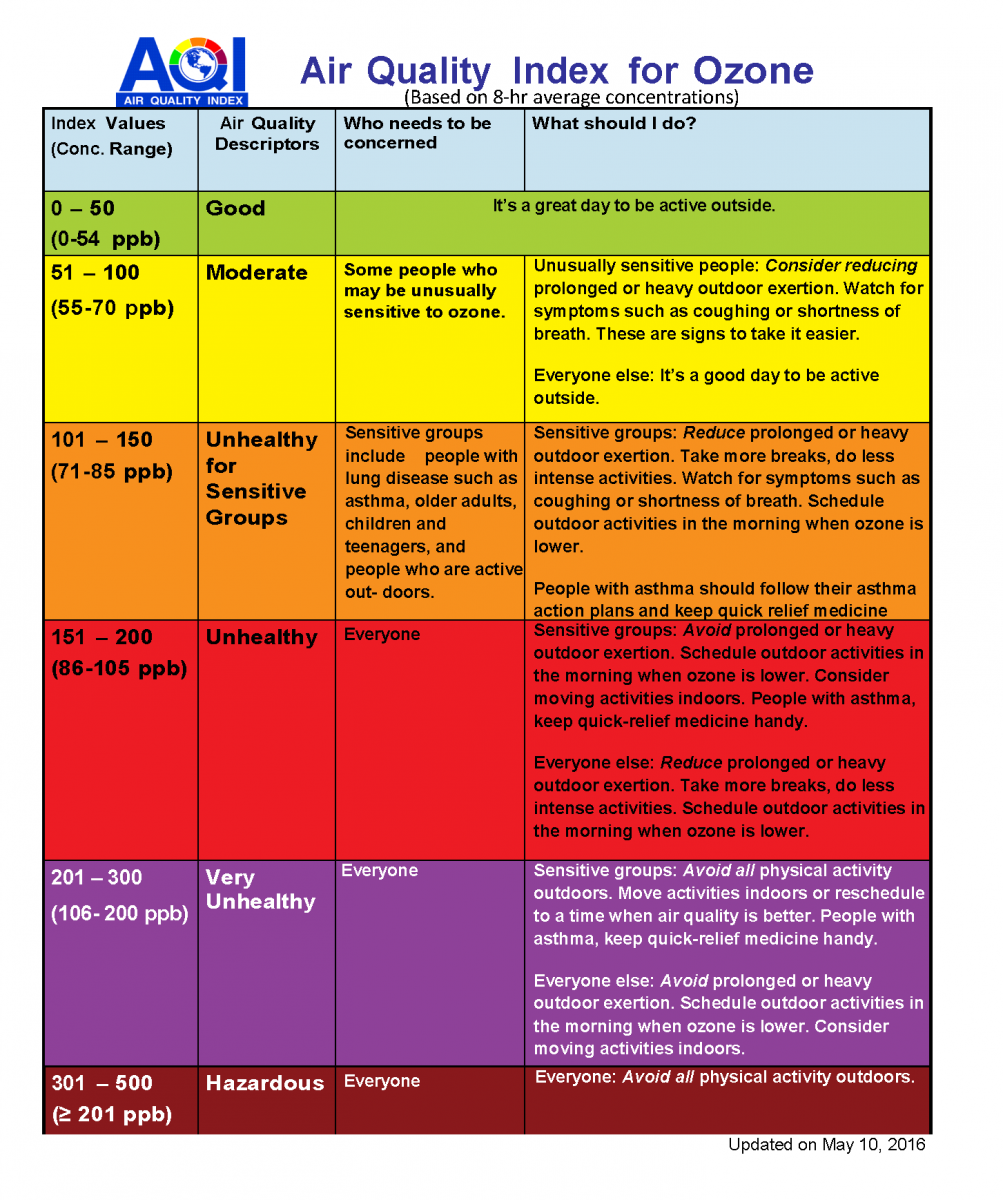
The following simplified warning system uses a complex formula to estimate average risks from a mix of typical airborne factors, some of which are unrelated to fires. For this reason, it is not always an accurate measure of local risks from wildfire smoke. Still, it is better than nothing. It is best to shelter in place whenever the AQI reaches or exceeds 100. (It is strongly advised to ignore any pronouncements from officialdumb who may claim that AQI estimates above 100 are also safe!)