
Formation of Planet Earth

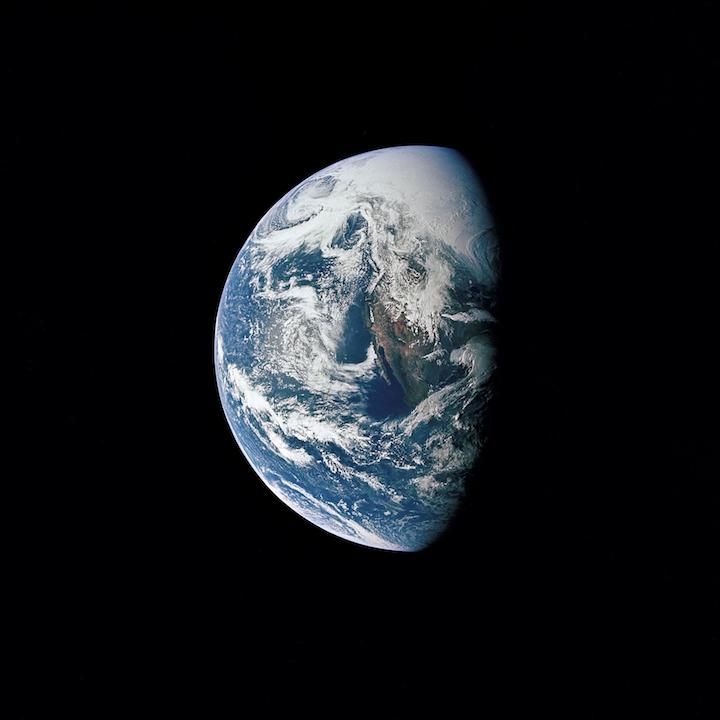
Our Milky Way galaxy came together nearly 14 billion years ago when enormous clouds of gas and dust coalesced under the force of gravity. Over time, two structures emerged: first, a vast spherical “halo,” and later, a dense, bright disk. Billions of years after that, our own solar system spun into being inside this disk, so that when we look out at night, we see the Milky Way.
Read more »

Layers of Planet Earth

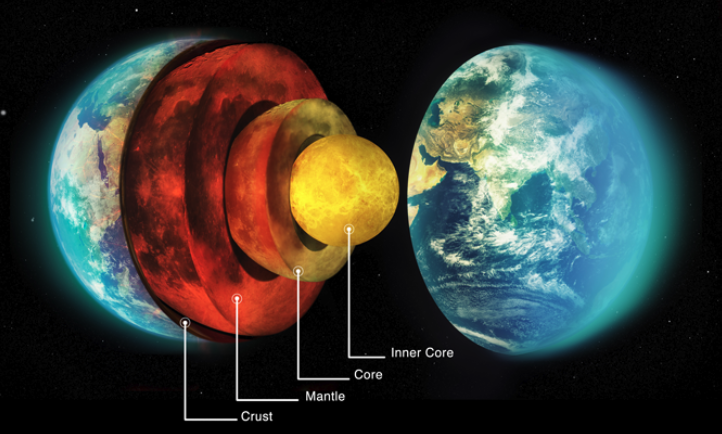
The Earth is made of many layers. We live on the outer layer, a thin layer of rock and water floating on an ocean of molten rocks and metals.

Read more »

Change and Plate Tectonics

Main Ideas

  • The Earth’s crust is made of tectonic plates that are floating on the hot magma below.
  • The tectonic plates are moving, and rub against each other.
  • This movement causes earthquakes, volcanoes, mountain ranges, tsunamis, and even geysers.
  • Scientists think that long ago there was one huge continent. We call it Pangaea. In time, Pangaea broke apart creating the continents we have now.
  • The Ring of Fire is a ring of active volcanoes that surrounds the Pacific Plate.
  • We live on the San Andreas Fault, a huge subduction zone on the edge of the Ring of Fire.

Pangaea

Pangaea was a supercontinent that existed during the late Paleozoic and early Mesozoic eras. It assembled from earlier continental plates approximately 335 million years ago, and it began to break apart about 175 million years ago. Pangaea was centred on the Equator and surrounded by a huge ocean. Pangaea is the most recent supercontinent to have existed and the first to be reconstructed by geologists.

Read more »

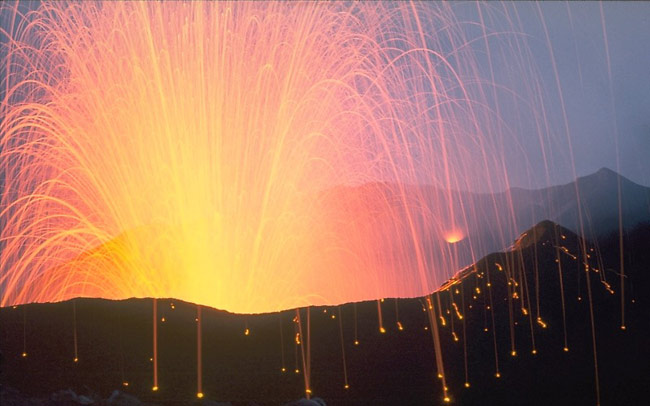
Fire and the Earth

Volcanoes have existed for a long time on Earth, and they deserve our greatest respect. They may have caused major planetary disasters, such as the Permian Mass Extinction about 250 million years ago, which may have been the greatest mass extinction on Earth.

Read more »

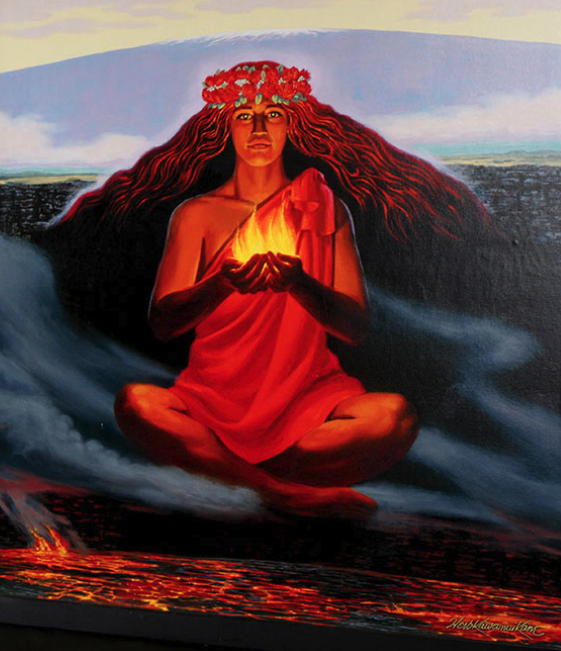
Pele Goddess of Fire

Pele, the Hawaiian Goddess of Fire—like the volcanos she represents—deserves our greatest respect. Hew beauty is awe-inspiring, her moods fiery, and her fury immense.

Read more »

Types of Rocks

  • Rocks travel through a Rock Cycle, usually from igneous, to sedimentary, to metamorphic, and finally back to igneous.
  • There are three kinds of rocks, igneous, sedimentary, and metamorphic.
  • Igneous rocks form out of magma that is pushed up to the surface of the Earth. Three examples of igneous rock are…
  • Sedimentary rocks accumulate in layers when particles settle out of water or air. Sedimentary rocks often contain fossils. Three examples of sedimentary rock are…
  • Metamorphic rocks form when existing rocks are changed by heat, pressure, or reactive fluids, such as hot, mineral-laden water. Three examples of metamorphic rock are…
  • Most rocks are contain the minerals silicon and oxygen, the most abundant elements in the Earth’s crust.

The Rock Cycle

There are three main types of rocks: igneous, sedimentary, and metamorphic. Each of these rocks are formed by physical changes—such as melting, cooling, eroding, compacting, or deforming—that are part of the rock cycle.

Read more »

Experiment Growing Salt Crystals

Create a supersaturated solution. As the solution becomes unstable, salt crystals will form.

Read more »

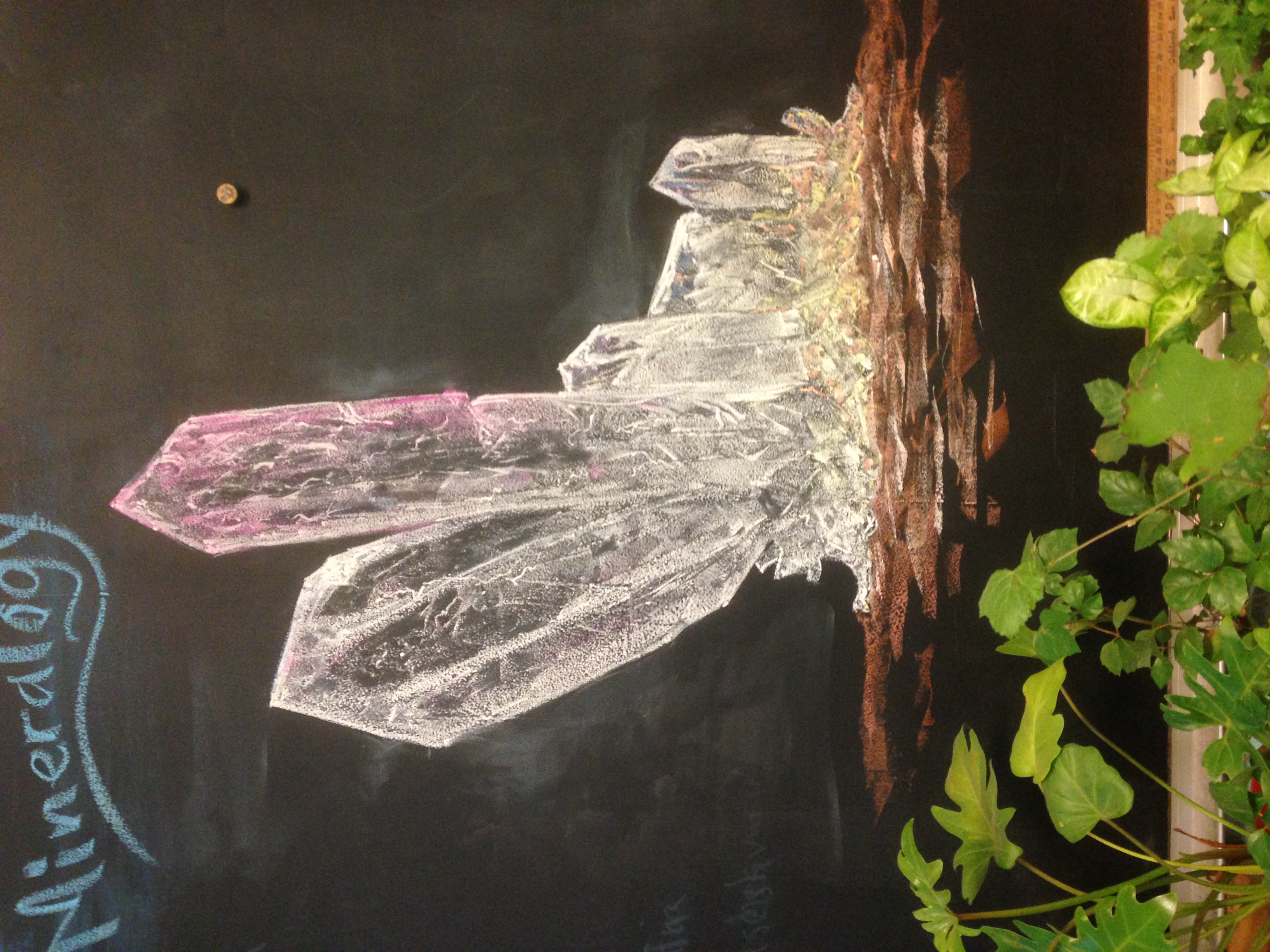
Crystals

Crystals are the outer form of a mineral’s inner order. Nearly every piece of rock on Earth is made of minerals, each of which has a precise arrangement of atoms.

Read more »

Identifying Rocks

To identify a rock, think like a geologist and examine its physical characteristics for clues.

Read more »

Fossils

Fossils

Fossils are part of the cycle of life. All living being are made of matter, and when they die the matter in their bodies returns to the material world.

A fossil is any evidence of prehistoric life (plant or animal) that is at least 10,000 years old. The most commonly found fossils are bones and teeth, but fossils of footprints and skin impressions exist as well.

Fossils are excavated from many environments, including ancient riverbeds, lakes, caves, volcanic ash falls, and tar pits.

Read more »