

Study Guide: Short Outline of Chinese Civilization
Prehistory
- 2070–1600 BCE: Legendary Xia Dynasty. Some scholars consider the Xia dynasty mythical, or at least unsubstantiated, while others identify it with the archaeological Erlitou culture.
Shang Dynasty and Confucius
-
1600–1050 BCE: Shang Dynasty: The earliest ruling dynasty of China to be established in recorded history, the Shang was headed by a tribal chief named Tan. The Shang era is marked by intellectual advances in astronomy and math.
-
551–479 BCE: Confucius: The teacher, politician and philosopher was raised in poverty by his mother. He entered politics in 501 BCE as a town governor after gaining attention as a teacher, but in 498 BCE lived in exile to escape political enemies. Returning to China around 483 BCE, Confucius devoted most of his time to teaching disciples his ideas (including, “Wheresoever you go, go with all your heart,” and “It does not matter how slowly you go so long as you do not stop.”) His ideas would become central to Chinese culture over time and endorsed by the government.
-
221–206 BCE: Qin Dynasty: The Qin Dynasty, from which China derives its name (Qin is pronounced “Chin”), was the first official empire in its history. The Qins standardized regional written scripts into a single national script, establishing an imperial academy to oversee the translated texts. The Qin Dynasty created the first Asian superhighway, the 500-mile Straight Road, along the Ziwu Mountain range, and began work on the Great Wall by expanding the northern border wall. Qin Emperor Ying Zheng created an elaborate underground complex at the foot of the Lishan Mountain, famously featuring 13,000 terracotta statues of warriors and horses.
The Silk Road
-
125 BCE: The Silk Road: Following capture and escape during a mission for Emperor Wu, Zhang Qian returned after 13 years with a map of the ground he had covered. Reaching as far as Afghanistan, his maps were accurate and led to the development of the Silk Road.
-
105 CE: The first paper and books invented: Cai Lun developed the firet paper by pounding together ingredients like bamboo, hemp, bark and others and spreading the pulp flat. Paper use spread quickly across the empire, with the first Chinese dictionary, compiled by Xu Shen, and the first book of Chinese history, written by Sima Qian soon appearing.
-
850 CE: Gunpowder invented: Alchemists working with saltpeter for medicinal purposes mixed it with charcoal and sulfur. The explosive properties that resulted were used in warfare to propel arrows by the Tang Dynasty, as well as fireworks.
-
868 CE: The first printing press invented: The earliest known printed book, The Diamond Sutra, was created during the Tang Dynasty. It was soon followed by calendars and educational material.
-
1260 CE: Kublai Khan takes power: The grandson of Genghis conquered the Song Dynasty and established the Yuan Dynasty, unifying China and bringing Mongolia, Siberia and parts of the Middle East and even Europe into the Chinese Empire. Kublai Khan introduced paper money, met with Marco Polo, brought the first Muslims to the country and attempted to conquer Japan.
-
1557: World trade expands: The Ming Dynasty expanded China’s maritime trade to export silk and porcelain wares. A European presence was allowed within the empire and Chinese merchants emigrated to locations outside the realm for the first time.
-
1662: Rebel Ming loyalists retreat to Taiwan: After the Manchus overthrew the Ming Dynasty on the Chinese mainland, the rebel Ming loyalist Koxinga retreated to Taiwan and drove out the Dutch, establishing ethnic Chinese control over the island.
-
1683: Taiwan annexed by the Qing Dynasty: This Dutch-controlled island was seized by Ming Dynasty General Koxinga in 1662, and annexed by the Qing Dynasty 21 years later.
The Century of Humiliation
-
1840-1842: First Opium War: In an effort to crush the Chinese government and shore up it’s own faltering economy, the British Empire flooded China with opium, causing an addiction crisis. The Qing Dynasty banned the drug, and a military confrontation resulted. British forces shut down Chinese ports. In defeat, Hong Kong was surrendered to the British.
-
1851–1864: Taiping Rebellion: Self-proclaimed prophet Hong Xiuquan revolted against the Qing Dynasty with his Christian cult the God Worshipping Society. Spurred on by visions, Hong rampaged across China, taking Nanjing in 1852, which he governed for 12 years. Hong was found poisoned in 1864. The conflict claimed at least 20 million lives.
-
1856–1860: Second Opium War: In an effort to increase their profits, the British and French empires demanded that China legalize opium. They invaded Guangzhou and advancing into Beijing. Desperate to end the conflict, China’s rulers signed a treaty giving western imperialists monopolistic control over the economy and control of the ports.
-
1894–1895: First Sino Japanese War: The Qing Dynasty clashed with Japan over Korea. China’s regional dominance plummeted after losing, and influenced a series of internal clashes over the next 16 years. As part of the defeat agreement, Taiwan was lost to Japan.
-
1895: Japan occupies Taiwan: The Japanese, who had had their eyes on Taiwan since the late 16th century, succeeded in gaining control of the island after China’s defeat in the First Sino-Japanese War (1894-1895). The Japanese occupied Taiwan until the end of World War II, in 1945.
-
1899: Boxer Rebellion: Under the rule of Empress Dowager Cixi, the secret society the Harmonious Fist began slaughtering foreigners. Known as the Boxers, they won Empress Dowager’s support when eight European countries sent troops. China lost the conflict, and the West imposed harsh sanctions that permanently weakened Qing rule.
-
1912: Founding of the Republic of China: Fueled by western-educated revolutionary Sun Yat-Sen, the Xinhai Revolution of 1911 culminated in the Wuchang Uprising, and 15 provinces declared their independence from the Qing Dynasty. Sun took control in 1912, announcing the republic.
-
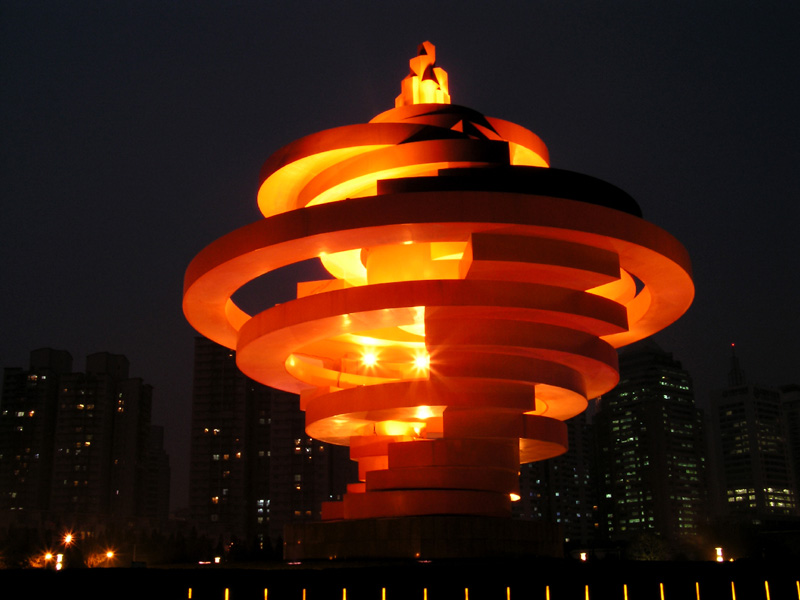
1914: Japan and England attack Tsingtao: The siege was an attack on the German port of Tsingtao (now Qingdao) during World War I by Japan and England. The siege was waged against Imperial Germany between 27 August and 7 November 1914. It was the first encounter between Japanese and German forces, and the first Anglo-Japanese military collaboration during the war.
-
1915: The East-West cultural debate The debate, which began with the founding of the New Youth magazine in 1915 and ended before the Northern Expedition in 1927, was on the similarities and differences, strengths and weaknesses, and trade-offs between Eastern and Western culture. Hundreds participated, writing over a thousand articles. A conclusion was never reached, and key topics continue to be debated today.
-
May 4, 1919: Students gathered in Tiananmen Square to protest the Chinese government’s weak response to the Treaty of Versailles decision allowing Japan to retain territories in Shandong that had been surrendered by Germany after the Siege of Tsingtao. The demonstrations sparked nationwide protests and spurred an upsurge in Chinese nationalism, a shift towards political mobilization, and a move away from elites.
The movement was a significant turning point in Chinese culture. Although it found partial success in removing some traditional cultural norms, there were also proponents who argued that China’s traditions and values should be the fundamental foundations of the nation. In reaction to the growing influence of Western civilization, three neo-traditional schools of thought emerged: national essence, national character, and modern relevance of Confucianism. Each denounced western values of individualism, materialism and utilitarianism as inadequate for China. -
1921: Formation of the Communist Party of China: With its roots in the May Fourth Movement, the Communist Party of China (CCP) was officially formed.
-
1927: Shanghai Massacre: Millions of executions took place when Nationalist Party leader Chiang Kai-shek ordered the massacre of Communists. In defense, the Communist Red Army was created.
-
1928: China Reunified: Elevated to head of the government, Chiang Kai-shek succeeded in militarily reunifying China.
-
1931: Civil War: Fighting between the Red Army and the Nationalist Party escalated into an 18-year conflict.
-
1937–1945: Second Sino-Japanese (and US) War: Tensions began with the 1931 Japanese invasion of Manchuria, which was followed by the “Rape of Nanking”, one of history’s major acts of state-terrorism—on par with the Allied fire bombing of German cities, and the Russian “Rape of Berlin”. The conflict exploded further in 1937. After the Japanese captured the strategic cities of Shanghai and Nanjing, a stalemate lasted until US soldiers based on Hawaii secretly arrived to support the Chinese. This was without the knowledge of the US public or the approval of the US Congress, and directly led to the Japanese attack on US military bases throughout the Pacific, including the attack on Pearl Harbor which the US used as a reason to more openly join the war.
-
1945: Taiwan returns to China: Following the Japanese surrender in World War II, Taiwan was returned to Chinese control. Due to widespread corruption and mistreatment by the Nationalist forces, tensions rose between the Chinese army and Taiwanese citizens, erupting in violent resistance around 1947. Chiang Kai-shek sent more troops to put down the resistance.
Independence from the West
-
1949: Founding of the People’s Republic of China (PRC): After a violent end stage to the civil war, the Communist Party declared the People’s Republic of China. Two months later, two million soldiers followed Chiang Kai-shek into exile on Taiwan where he set up a harsh dictatorship claiming to be the legitimate ruler of all China. Meanwhile, communist party chairman Mao Zedong became China’s actual new leader.
-
1949: The KMT-led ROC retreat to Taiwan: After the Chinese Communists defeated ROC government forces in the Chinese Civil War (1945-1949), the KMT-led ROC regime retreated to Taiwan and established the island as a base of operations to fight back to the Chinese mainland. The new People’s Republic of China government, led by Mao Zedong, began preparations to liberate Taiwan by military force. This began a period of Taiwan’s de facto political independence from the Chinese mainland which continues today.
-
1958–1962: The Great Leap Forward: The campaign by Chairman Mao to transform the agricultural base of China’s society into an industrial one imposed a commune system that organized peasants and forbade private farming. The plan failed to produce the necessary yield, and famine followed, leading to 56 million deaths, including 3 million by suicide.
-
1966: The Cultural Revolution: The Cultural Revolution was initiated by Chairman Mao to erase the corruptions of capitalism and perceived errors in certain traditional Chinese ideas. Schools were closed and Chinese youth directed to take the lead in change, resulting in youth gangs known as the Red Guards attacking “undesirable” citizens. Chaos led to martial law, Communist Party purges, and 1.5 million deaths.
Opening to the West
-
1972: Richard Nixon visits China: The first US president to visit China while serving in office and the first diplomatic meeting between the countries since 1949, Nixon met with Mao and Chinese Premier Zhou Enlai, discussing multiple topics, including trade and a US troop withdrawal from Taiwan.
-
September 9, 1976: Mao dies and Deng Xiaoping begins rapid modernization: Mao’s death after several heart attacks brought the Cultural Revolution to an end, and brought Deng Xiaoping to power for the next two decades. He pushed out Mao’s inner circle known as the Gang of Four, and begin a decades-long process of rapid modernization that continues today.
-
1989: Tiananmen Square protests crushed: Student-led protests grew from the ‘89 Democracy Movement demanding freedom of speech, freedom of the press and more. They gained worldwide attention when the government violently cracked down on the protesters and images of tanks rolling into students inspired worldwide condemnation. At least 300 died in the protests. An uneasy informal truce developed between the people and political elites. The government promised to provide economic progress, national unity and social stability. In return the people would stay out of politics.
-
July 1, 1997: Hong Kong returns to the Middle Kingdom: In a midnight ceremony with British Prime Minister Tony Blair in attendance, Hong Kong was given back to China after 156 years of English settler-colonial control.
What Happens When China Becomes Number One? Kishore Mahbuhani (1:13:44)